
1. Direction of Communication: One-Way vs. Two-Way
The most fundamental difference lies in how the host and the audience interact.
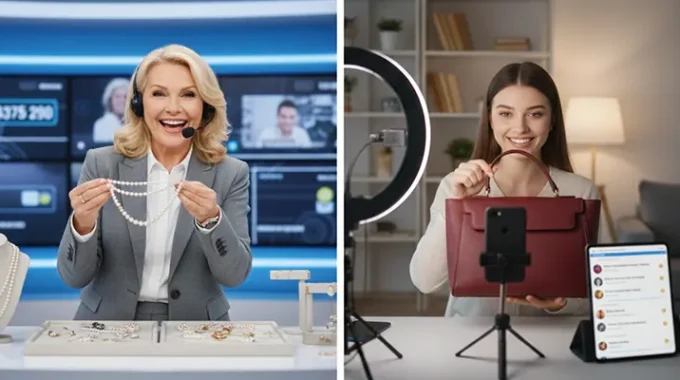
- TV Home Shopping: This is primarily a one-way broadcast. While you can call a phone number to place an order, there is no real-time dialogue between the viewer and the host. The host follows a scripted pitch, and the audience watches passively.
- Social Media Live Commerce: This is a two-way conversation.2 Viewers use a live chat to ask questions like “Can you show the inside of the bag?” or “How does the fabric feel?” The host can respond instantly, demonstrating specific features based on real-time feedback.3
2. Friction in the Buying Process
How a customer moves from “wanting” to “owning” is handled very differently across these mediums.
- TV Networks: To buy, you usually have to pick up a phone or visit a separate website to enter your details.4 This creates “friction” where a customer might change their mind while looking for their credit card.
- Social Commerce: Platforms like TikTok Shop or Instagram Live have integrated “Buy” buttons.5 A product tag appears on the screen; with one tap, the user can check out using pre-saved payment info without ever leaving the video stream.
3. Production Values and Authenticity
- TV Home Shopping: These events are produced in professional studios with high-end lighting, multi-camera setups, and polished presenters. The “infomercial” vibe is intentional—it signals a corporate, established brand.
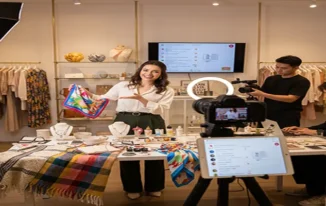
- Social Media Live Commerce: Authenticity is the currency here. Many successful streams are shot on a smartphone in a bedroom or a small warehouse. Viewers often prefer the raw, unscripted nature of a “faceless” or influencer-led stream over a high-budget production.
4. Target Demographics and Audience
The “who” is just as important as the “how.”
- TV Networks: The average viewer for home shopping networks tends to be older (Gen X and Boomers) who value the long-form, detailed explanations and the familiarity of traditional television.
- Social Media: Live commerce is dominated by Gen Z and Millennials. These audiences are “discovery-oriented,” meaning they don’t necessarily go to the app to shop; they stumble upon a live stream while scrolling for entertainment and make an impulse purchase.
Comparison Summary Table
| Feature | TV Home Shopping | Social Media Live Commerce |
| Primary Device | Television Set | Smartphone / Tablet |
| Host Type | Professional TV Presenter | Influencers / Business Owners |
| Interaction | None (Call-in only) | Real-time Chat & Polls |
| Checkout | External (Phone/Web) | In-App (One-Click) |
| Pace | Slow, Detailed | Fast, High-Energy |
| Tone | Scripted & Polished | Spontaneous & Relatable |
While TV home shopping networks laid the groundwork for remote retail, social media has transformed it into an interactive “shoppertainment” ecosystem. For a business, choosing between them depends on your target age group and whether your brand thrives on corporate polish or raw, community-led engagement.